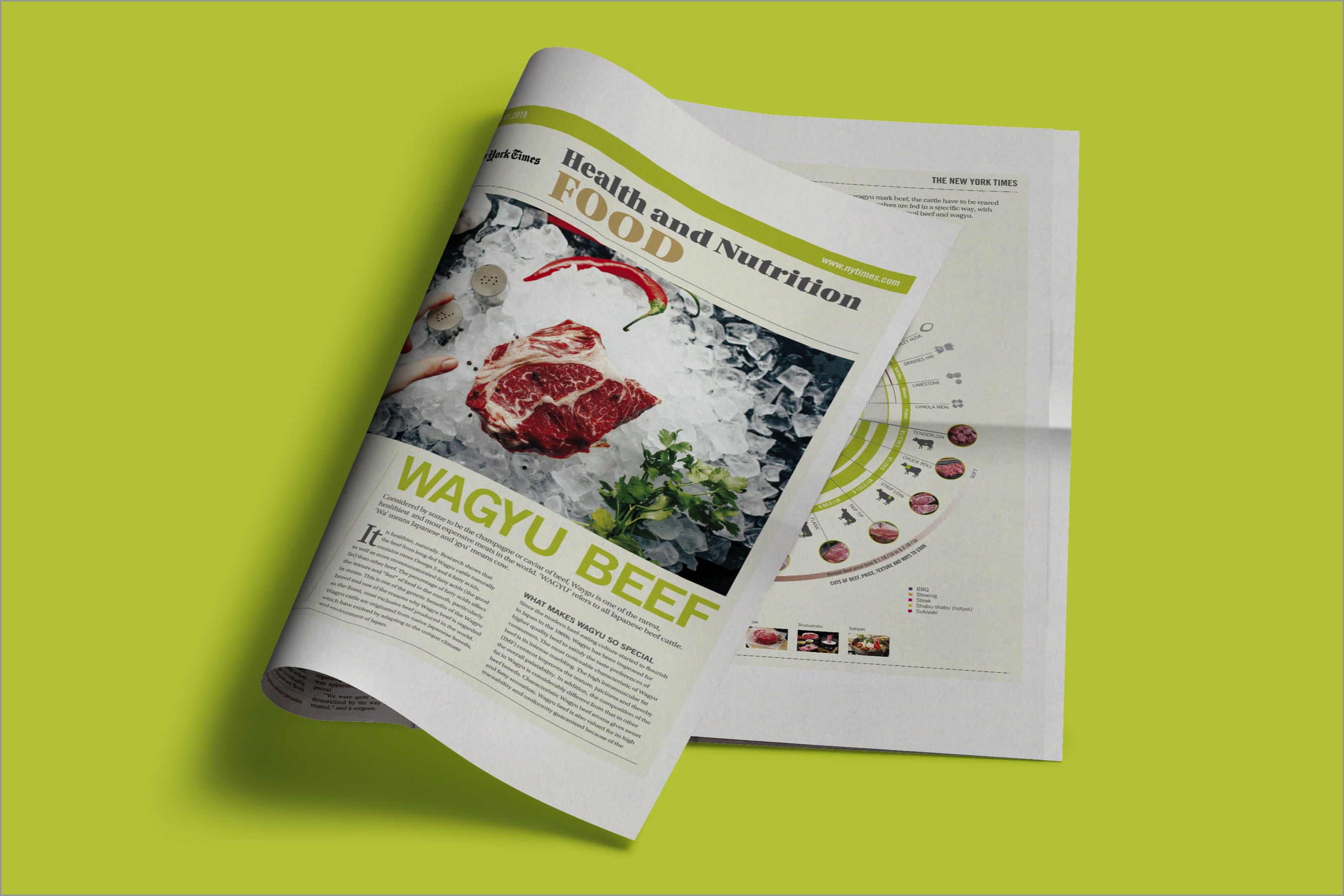
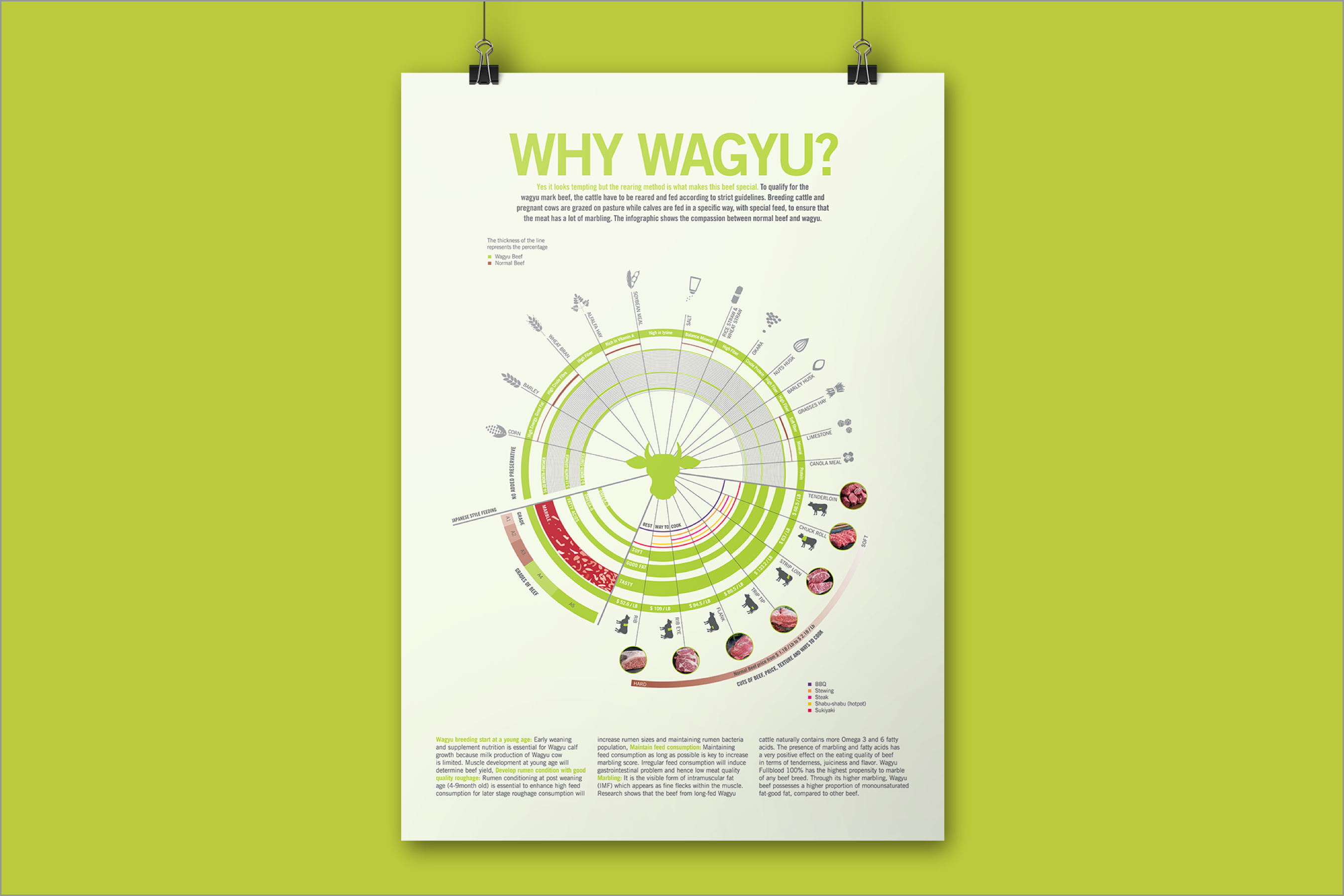
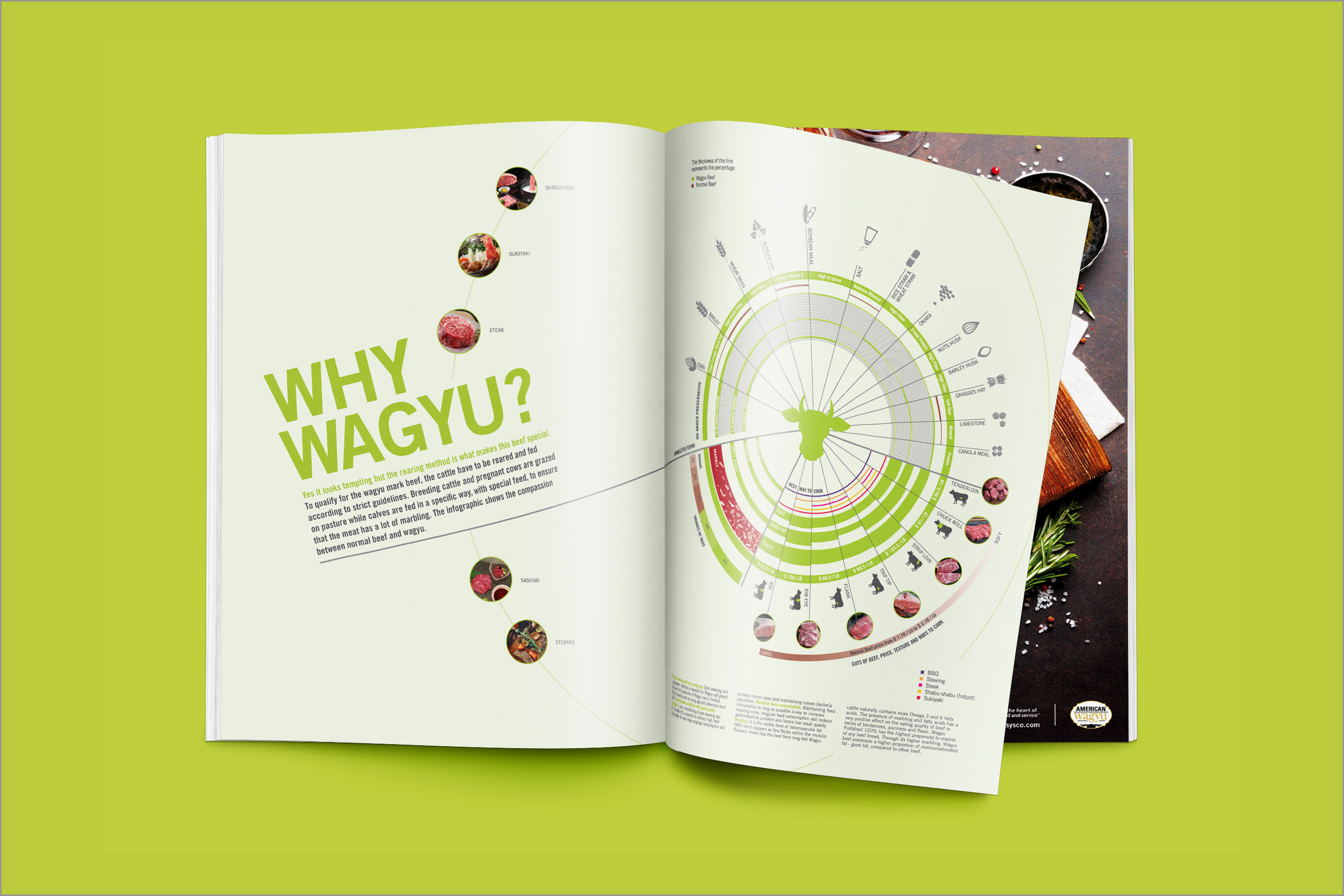
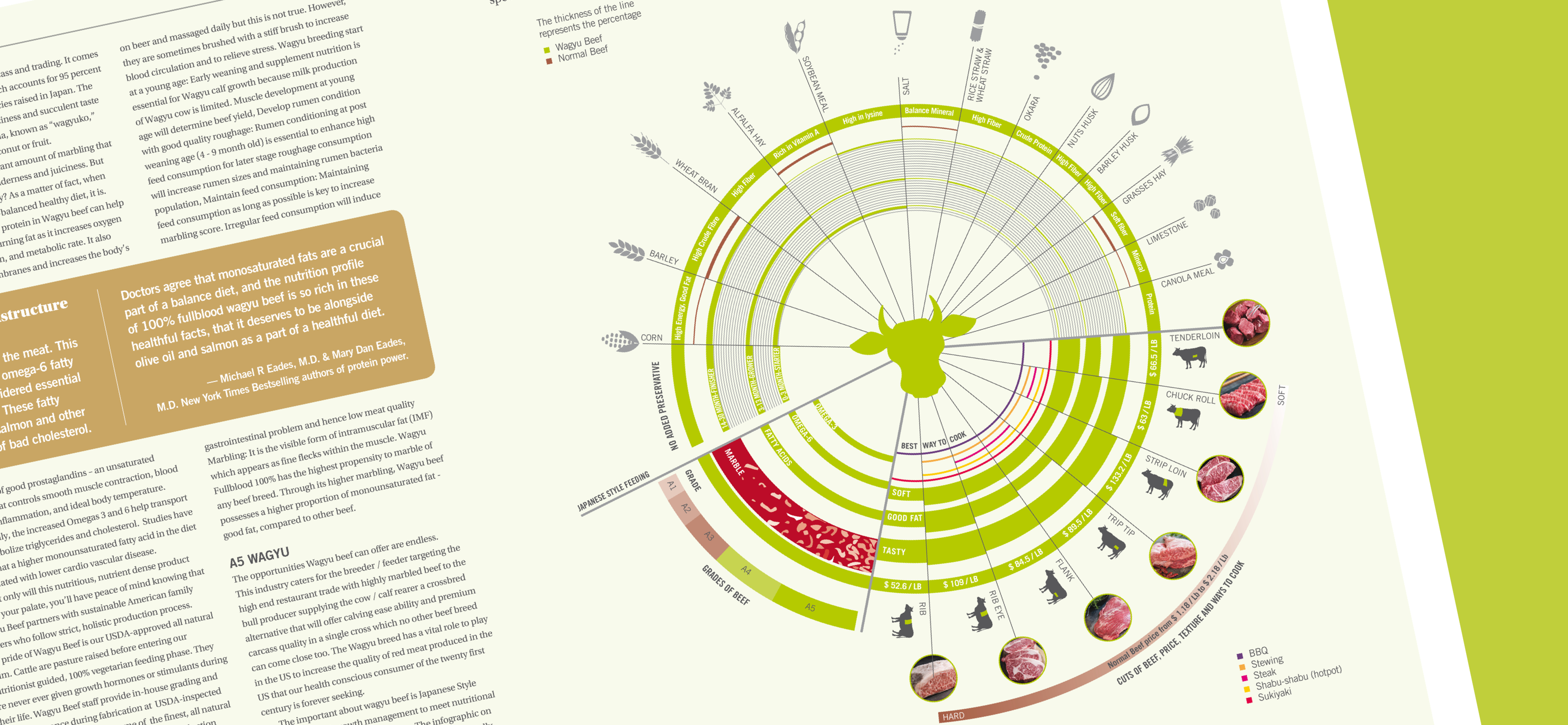
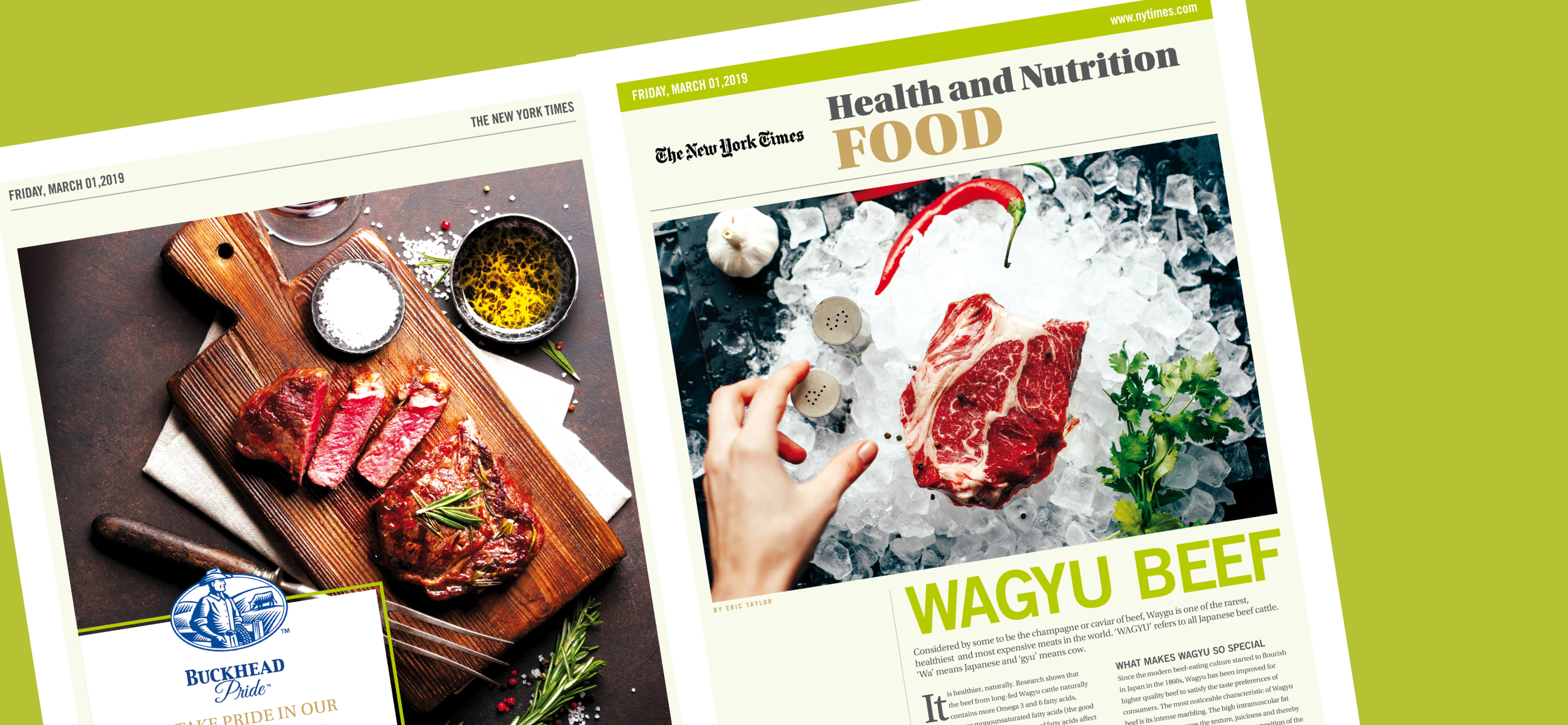
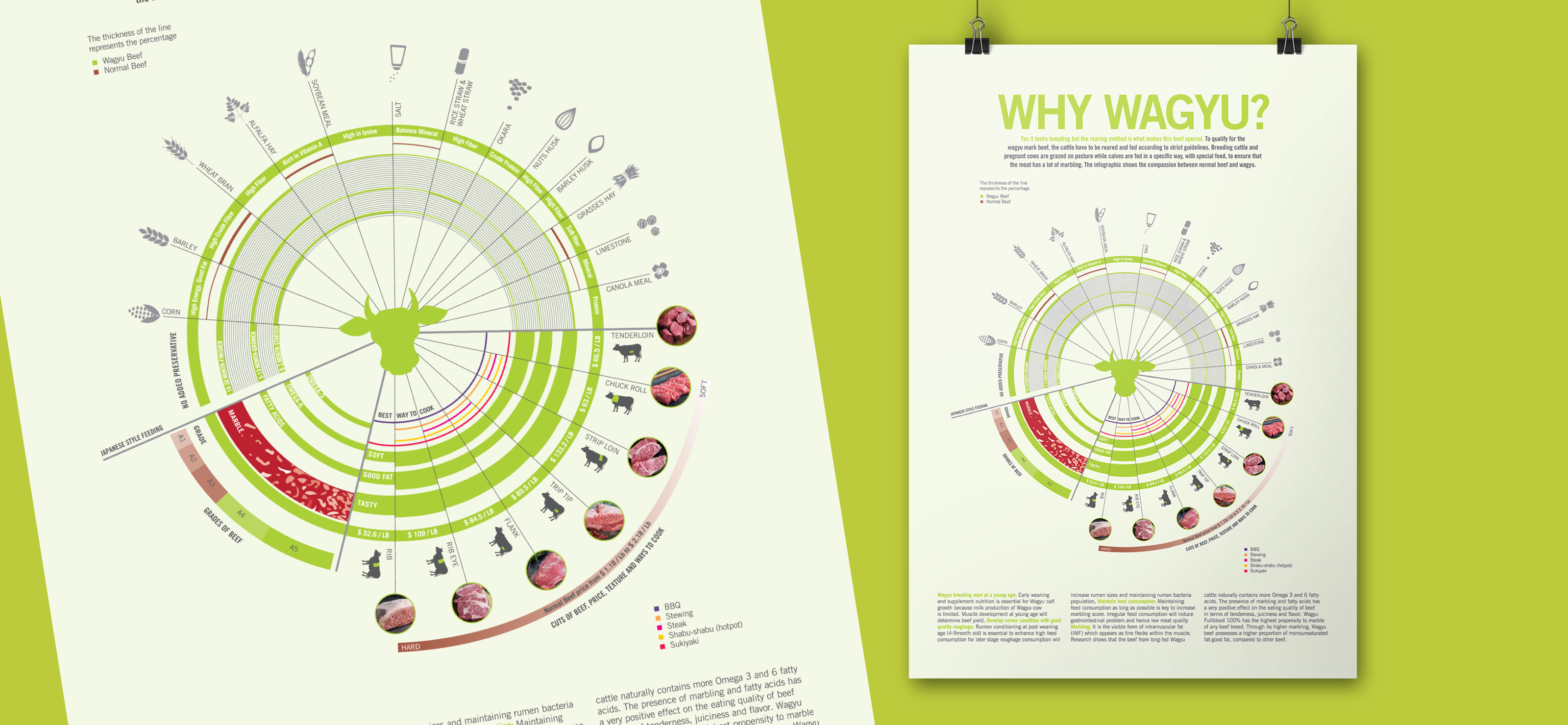
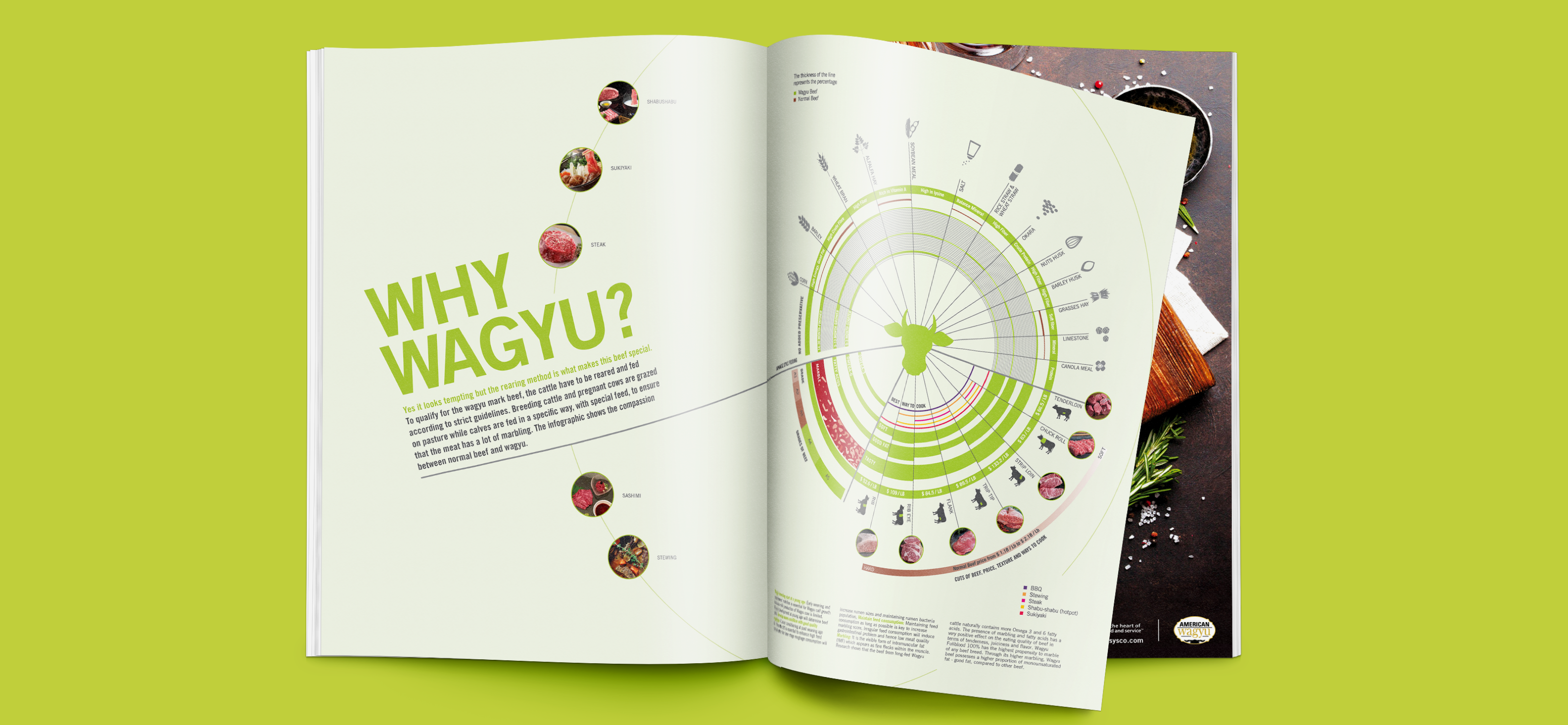
During research I observed that most people around me had limited information about wagyu. The idea behind designing this New York Times article and infographic was to create engaging content that could be consumed by a wider audience. By adopting the storytelling approach, I share the most interesting and important details about wagyu with an infographic as the backbone of my story.
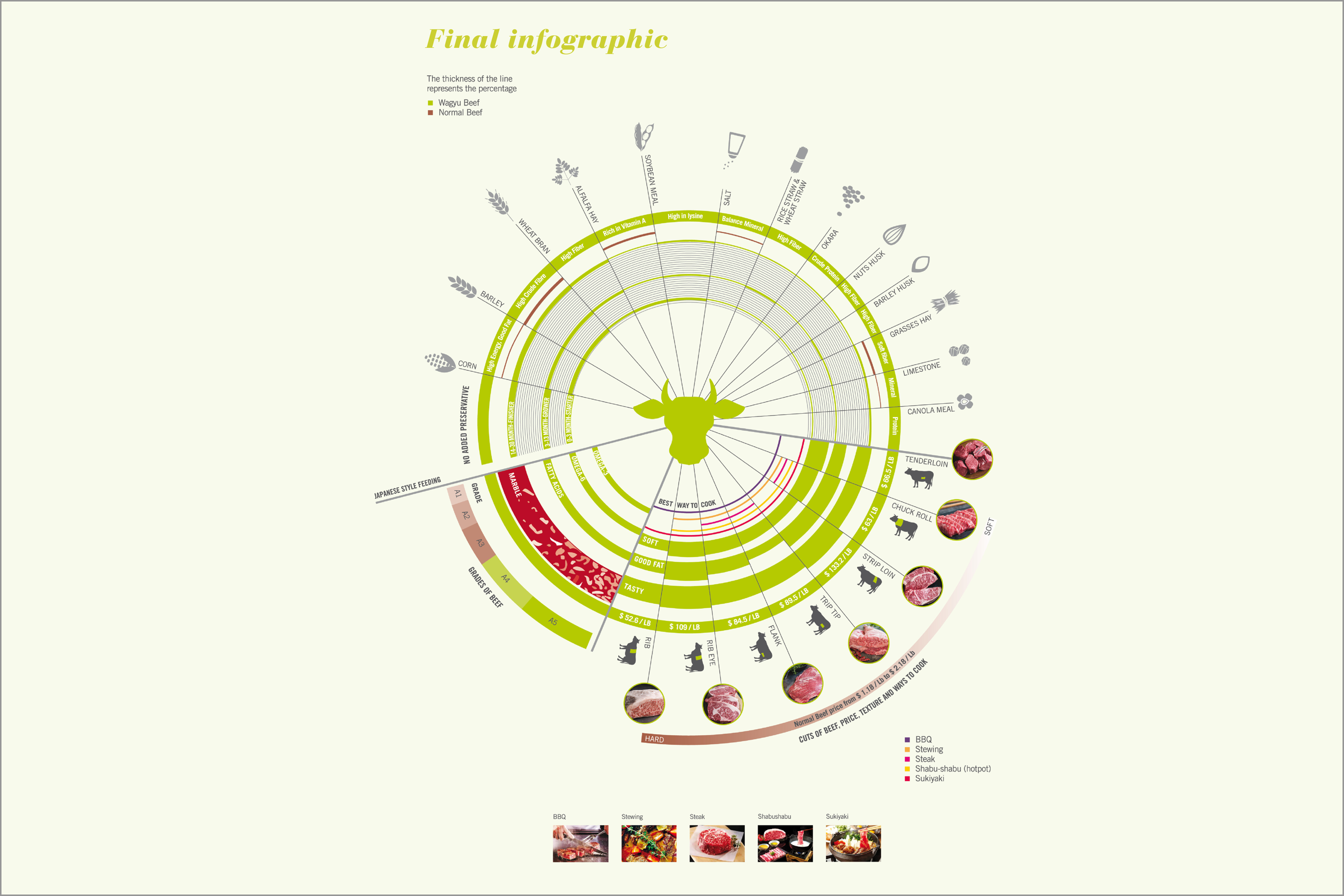
Difference between normal beef and Wagyu Beef.
Give information about what makes wagyu so special.
Explain the Japanese style breeding method and its importance in making wagyu.
The A1 to A5 Marbling in beef and why wagyu is A5 grading.
Different cuts of beef and its texture, taste, price and ways to cook.
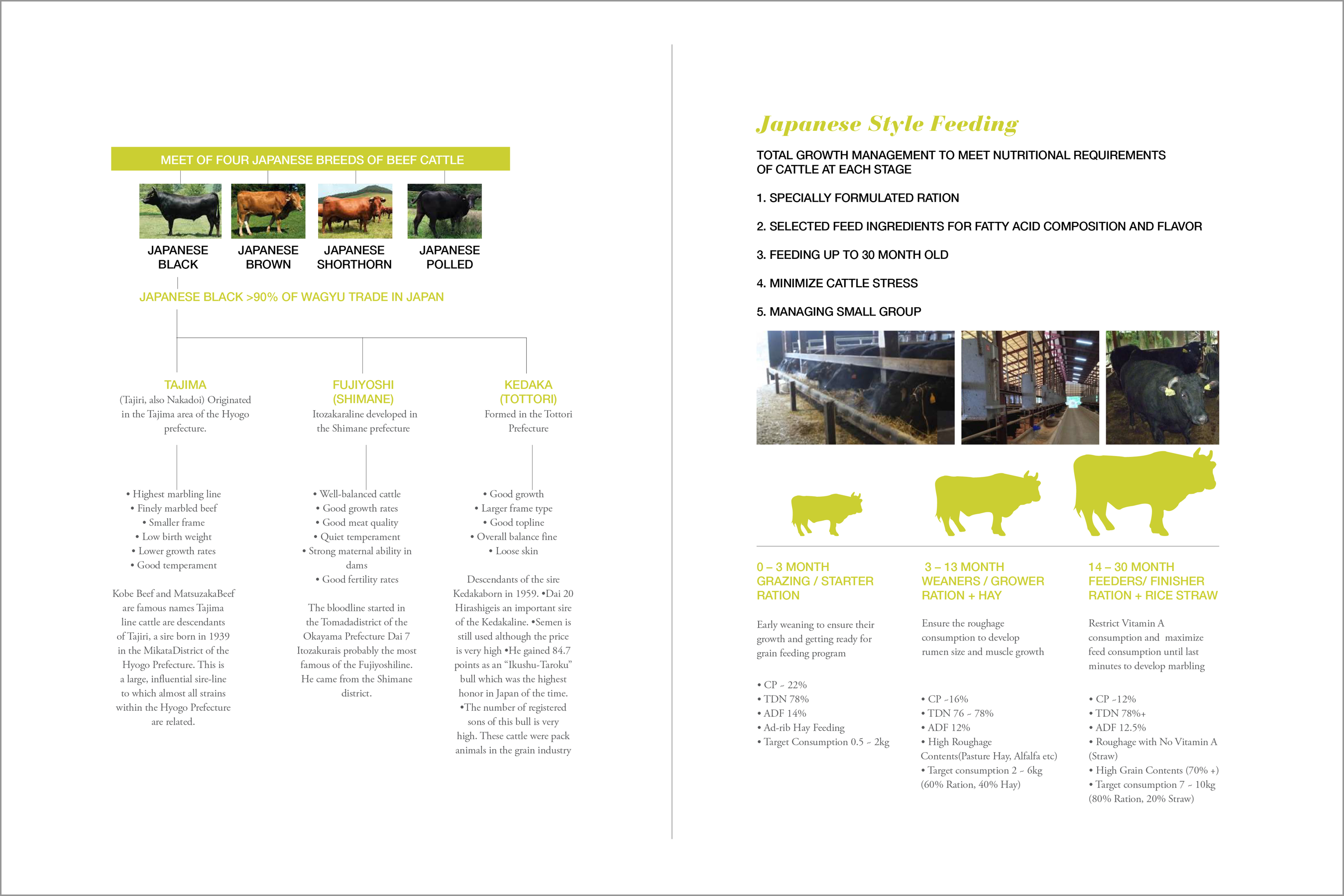

Wagyu are cattle that are Asian. The term Wagyu can actually refer to several different types of cattle. In Japan, there are four types of Wagyu cattle. These main four strains are the Japanese Black, Japanese Brown, Japanese Polled and Japanese Shorthorn.
Marbling is the visible form of intramuscular fat (IMF) which appears as fine flecks within the muscle. The presence of marbling has a very positive effect on the eating quality of beef in terms of tenderness, juiciness and flavor. Wagyu Fullblood100% has the highest propensity to marble of any beef breed. Through its higher marbling, Wagyu beef possesses a higher proportion of monounsaturated fat, compared to other beef. New research suggests that Wagyu beef can help maintain muscle while burning fat as it increases oxygen intake, energy production and increases the rate of metabolism.
Read full Report 
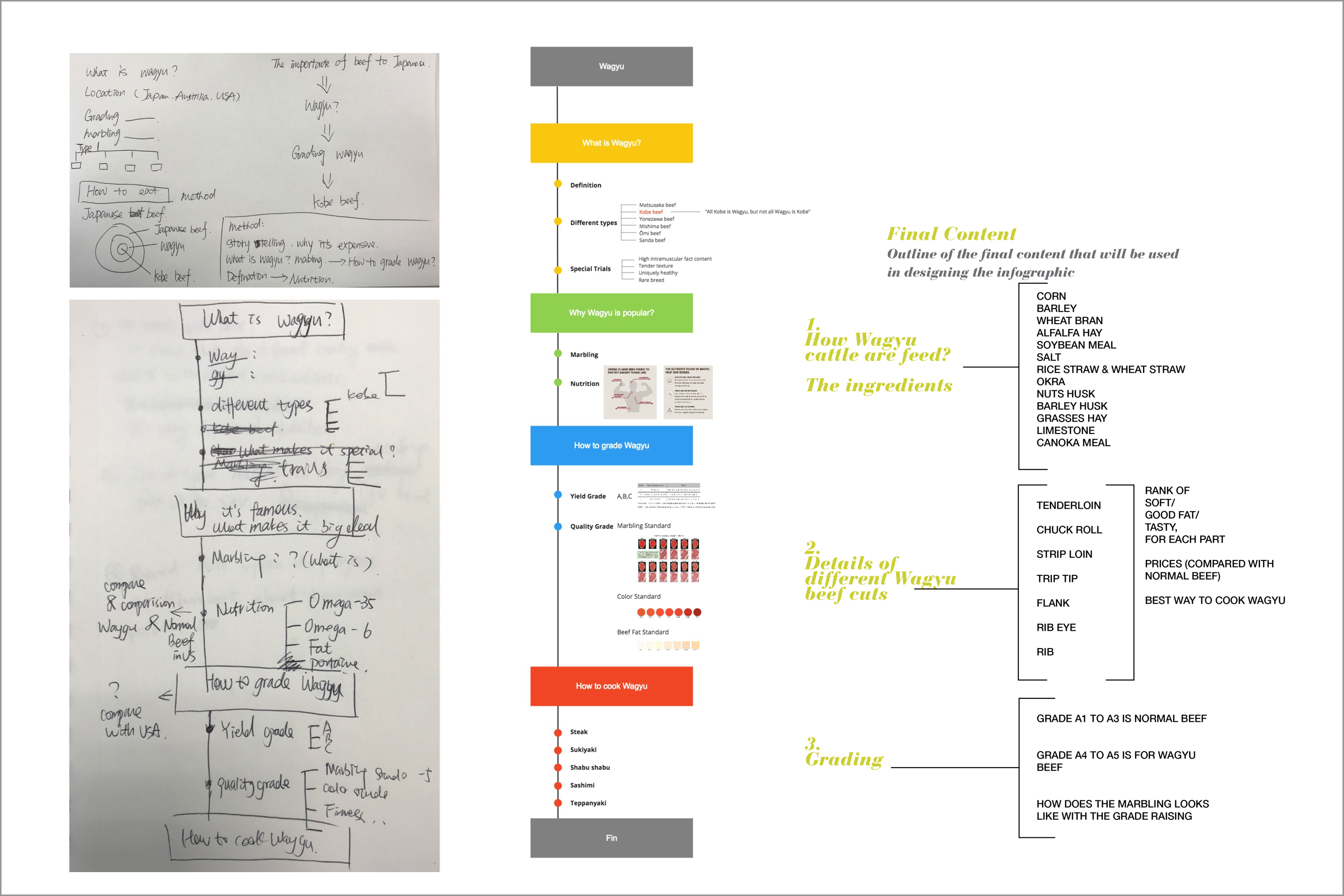
Designing and developing information involves the processes of information management — a cycle of acquisition, development, distribution, and review. Common topics in information management include design, development, delivery, quality assurance, translation, globalization, and localization.
Read full Report 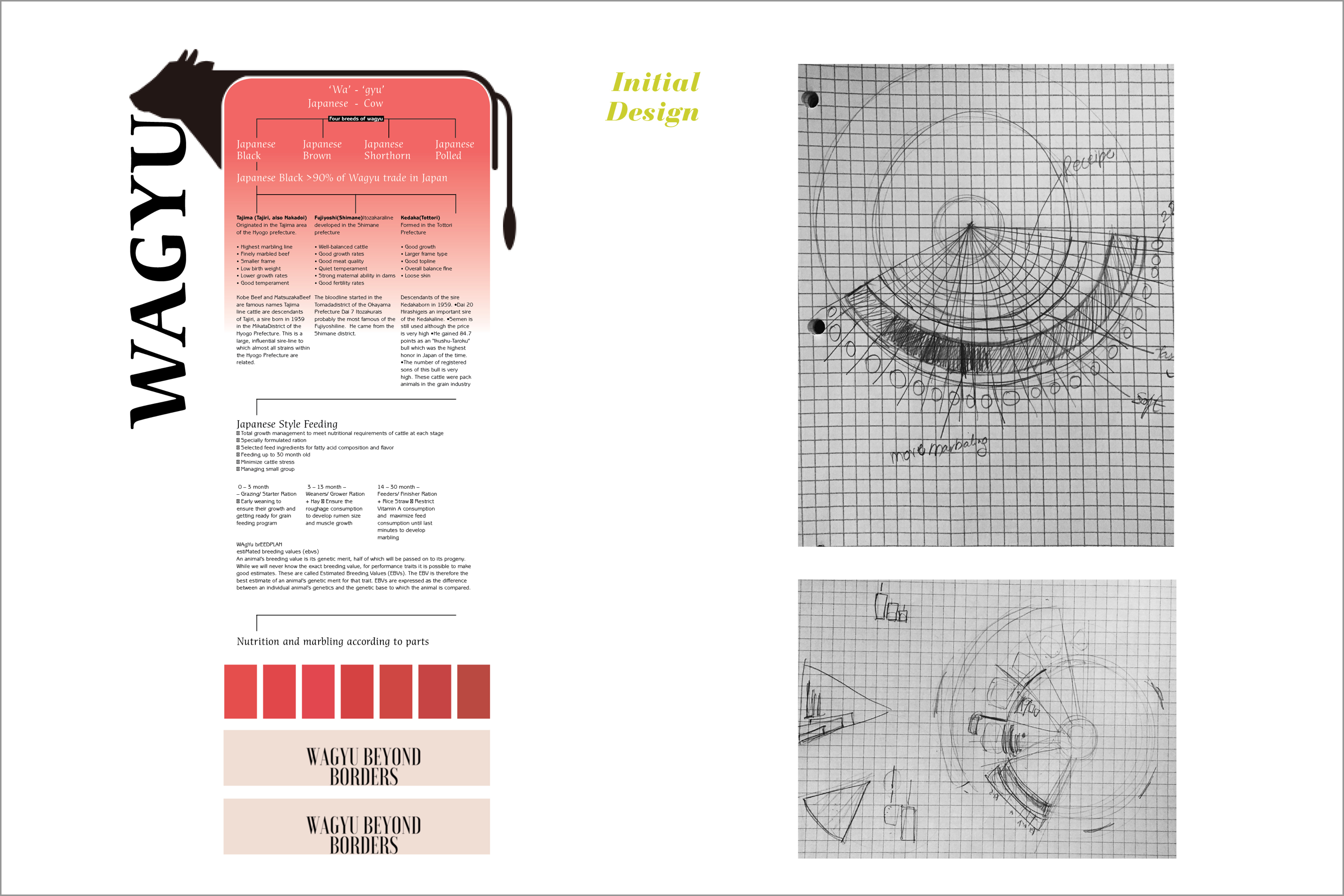
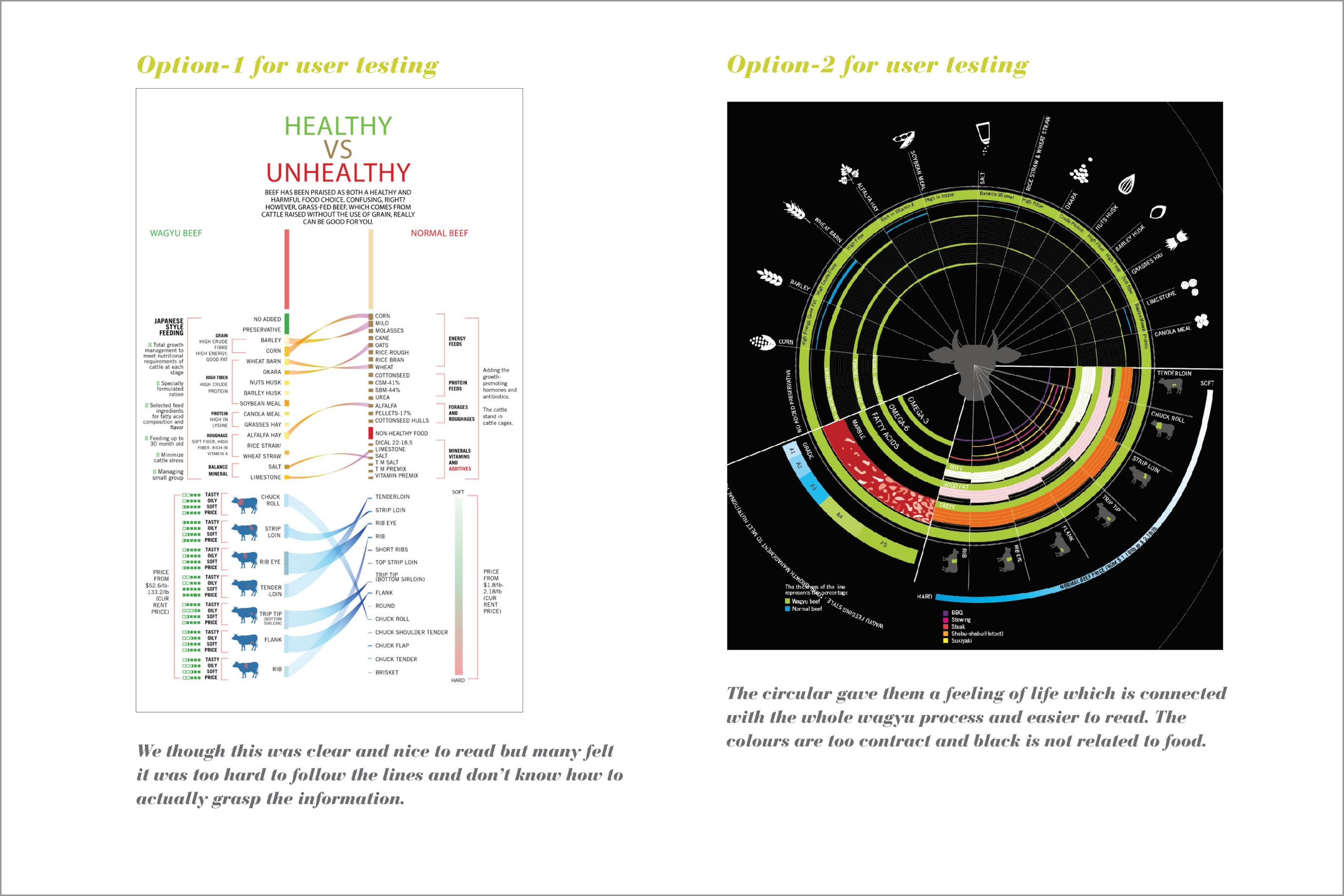
Designing information visualizations offers endless possibilities when it comes to end products and it would be impossible to provide step-by-step instructions for all these possibilities. However, it is fair to say that while the end products may vary dramatically – the process by which I reach the best possible end product is consistently the same.
Read full Report